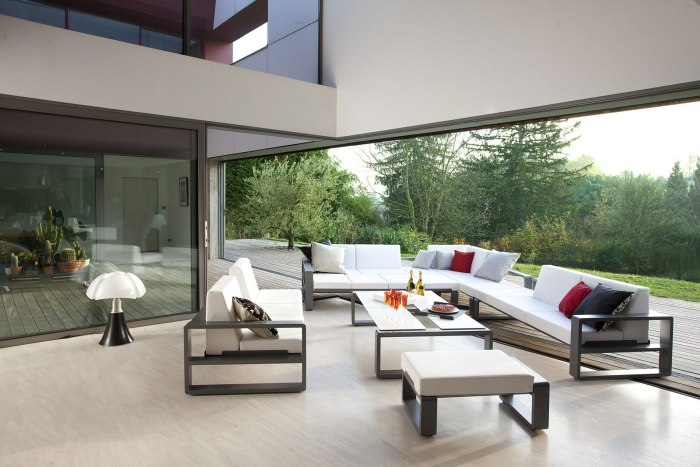
Modern outdoor furniture seamlessly blends style and functionality, transforming outdoor spaces into sophisticated extensions of the home. This guide delves into the design elements, materials, and trends shaping this evolving sector, exploring everything from minimalist aesthetics to sustainable manufacturing practices. We’ll examine the key factors influencing both design and purchasing decisions, providing a comprehensive overview for anyone looking to enhance their outdoor living experience.
From understanding the defining characteristics of “modern” in outdoor furniture design to navigating the diverse range of materials and manufacturing processes, this exploration covers the spectrum of considerations. We’ll analyze design trends, ergonomic principles, and the importance of choosing furniture suitable for various outdoor environments and landscaping styles. Ultimately, the goal is to equip you with the knowledge needed to select and maintain high-quality, stylish, and durable modern outdoor furniture.
Outdoor Furniture in General
Choosing the right outdoor furniture can significantly enhance the enjoyment and functionality of your outdoor spaces. From relaxing evenings on the patio to lively gatherings in the garden, the right pieces can transform your outdoor areas into comfortable and stylish extensions of your home. Understanding the various types available and their respective characteristics is key to making an informed decision.
Types of Outdoor Furniture
A wide array of outdoor furniture styles and materials caters to diverse tastes and needs. Popular choices include chairs, sofas, tables, ottomans, and loungers, each available in various designs and materials. For example, Adirondack chairs are known for their classic design and comfort, while bistro sets provide a compact and stylish solution for smaller spaces. Larger pieces, like sectional sofas, offer ample seating for gatherings.
The choice depends largely on the available space and intended use.
Factors to Consider When Choosing Outdoor Furniture
The selection process involves careful consideration of several key factors. The size and layout of the outdoor space are paramount; a large patio can accommodate expansive furniture sets, while a balcony might necessitate more compact pieces. The intended use—relaxation, dining, or entertaining—dictates the type of furniture required. For example, a dining set is essential for outdoor meals, while comfortable loungers are ideal for relaxation.
Finally, the overall aesthetic should complement the existing outdoor décor and personal style. Consider materials, colors, and designs that create a cohesive and visually appealing space.
Durability and Maintenance of Outdoor Furniture Materials
Different materials offer varying levels of durability and require different maintenance routines. Wrought iron, while strong and elegant, requires regular cleaning and painting to prevent rust. Aluminum is lightweight, durable, and rust-resistant, needing minimal maintenance. Wood, a classic choice, offers warmth and natural beauty but requires regular sealing and protection from the elements to prevent rot and damage.
Plastic and resin furniture are generally low-maintenance and weather-resistant but may not be as aesthetically pleasing as other options. Finally, wicker and rattan, often used for a bohemian feel, require careful cleaning and protection from moisture.
Protecting Outdoor Furniture from Weather Damage
Protecting your investment from the elements is crucial for extending its lifespan. Regular cleaning removes dirt and debris that can cause damage. Applying appropriate sealants and protective coatings helps repel water and UV rays, preventing fading and deterioration. During harsh weather conditions, consider storing furniture indoors or using protective covers. For example, using waterproof covers during periods of heavy rain or snow can significantly reduce the risk of damage.
Regular inspections for signs of wear and tear allow for timely repairs or maintenance, preventing minor issues from escalating into major problems.
Modern Outdoor Furniture Pricing and Market
The modern outdoor furniture market is a dynamic landscape influenced by a complex interplay of design, materials, manufacturing processes, and consumer demand. Understanding these factors is crucial for both manufacturers and consumers navigating this increasingly popular sector. The price point of a piece can vary significantly depending on a number of key variables, leading to a wide range of options available to suit diverse budgets and styles.
Factors Influencing Price
Several key factors significantly impact the final price of modern outdoor furniture. Material choices play a dominant role; high-quality teak or sustainably sourced hardwood will command a higher price than cheaper alternatives like plastic or lower-grade wood. Similarly, the intricacy of the design and the craftsmanship involved in production directly affect cost. Hand-woven wicker or intricate metalwork will be more expensive than simpler, mass-produced pieces.
The manufacturing location and associated labor costs also influence pricing; furniture manufactured in countries with higher labor costs will generally be more expensive. Finally, the brand reputation and perceived value also contribute; established brands with a strong reputation for quality and design often command premium prices. For example, a high-end teak lounge chair from a renowned designer might cost several thousand dollars, while a comparable plastic chair from a mass-market retailer might cost only a few hundred.
Key Players and Market Trends
The modern outdoor furniture market is populated by a mix of established brands and emerging designers. Large-scale manufacturers, often with global distribution networks, dominate the mass-market segment, offering a wide range of affordable options. In contrast, smaller, independent designers and artisan workshops focus on high-end, bespoke pieces catering to a more discerning clientele. Current market trends indicate a growing preference for sustainable and eco-friendly materials, as well as a move towards modular and adaptable furniture systems that can be easily reconfigured to suit changing needs and spaces.
The increasing popularity of outdoor living spaces, fueled by trends such as staycations and a renewed focus on outdoor entertaining, further drives market growth. For instance, the rise of “outdoor rooms” complete with comfortable seating, dining areas, and even outdoor kitchens is a clear reflection of this trend.
Price Ranges of Different Types of Modern Outdoor Furniture
Price ranges for modern outdoor furniture vary considerably depending on the material, design, and brand. For example, a simple plastic bistro set might cost between $100 and $300, while a high-end teak dining set could range from $3,000 to $10,000 or more. Individual pieces, such as lounge chairs, can also vary widely. A basic aluminum chair might cost around $100, whereas a handcrafted wicker armchair could easily exceed $1,000.
Similarly, outdoor sofas range from budget-friendly options under $500 to luxurious designs costing several thousand dollars. These price differences reflect the variations in materials, craftsmanship, and brand prestige.
Hypothetical Marketing Campaign: “Embrace the Elements”
A hypothetical marketing campaign for a new line of modern outdoor furniture could focus on the theme “Embrace the Elements.” This campaign would highlight the durability and weather resistance of the furniture, emphasizing its ability to withstand various weather conditions. Visuals would showcase the furniture in a variety of outdoor settings, from lush gardens to minimalist urban spaces, emphasizing its versatility and adaptability.
The campaign’s messaging would target environmentally conscious consumers, highlighting the use of sustainable materials and responsible manufacturing practices. Social media engagement would be a key component, featuring user-generated content showcasing the furniture in real-life settings. The campaign would also emphasize the furniture’s comfort and style, positioning it as an investment in both outdoor living and personal style.
The overall tone would be sophisticated yet approachable, appealing to a broad range of consumers seeking high-quality, stylish, and sustainable outdoor furniture.
Modern outdoor furniture offers a compelling blend of aesthetics and practicality, enriching outdoor living spaces with both style and comfort. By understanding the key design elements, materials, and market trends, consumers can make informed decisions to create functional and visually appealing outdoor environments. Whether prioritizing sustainability, ergonomic design, or specific aesthetic preferences, this guide provides a framework for navigating the diverse world of modern outdoor furniture and creating an outdoor oasis that reflects personal style and enhances everyday life.
FAQ Guide
What is the average lifespan of modern outdoor furniture?
Lifespan varies greatly depending on materials and maintenance. High-quality, weather-resistant furniture can last 10-15 years or more with proper care.
How often should I clean my modern outdoor furniture?
Regular cleaning, ideally after each use or at least weekly, prevents dirt and debris buildup. Specific cleaning methods depend on the material; consult manufacturer instructions.
What are some ways to protect my furniture from harsh weather?
Use protective covers during storms or extended periods of inclement weather. Consider storing furniture indoors during winter in colder climates.
Are there any specific safety considerations for outdoor furniture?
Ensure furniture is stable and securely assembled. Choose materials appropriate for intended use and be mindful of potential hazards like sharp edges or splinters.


