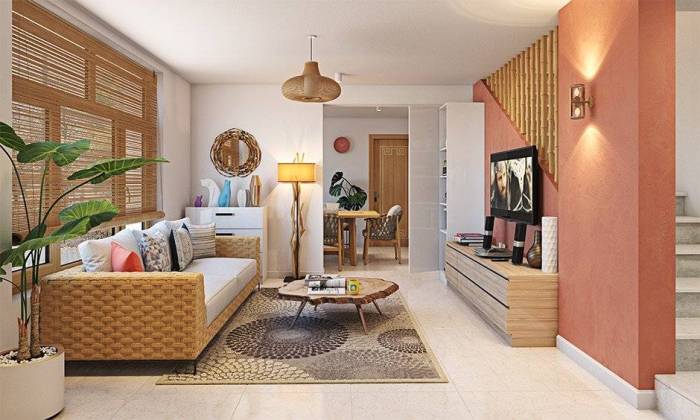
Embark on a journey through the world of Eco-Friendly Living Room Design, where innovation meets sustainability to create a harmonious space that’s both eco-conscious and stylish. Dive into the realm of energy-efficient lighting, sustainable furniture choices, seamless indoor-outdoor connections, and more.
Explore the intersection of nature and design as we delve into ways to bring the outdoors in while minimizing our environmental impact, making your living room a true sanctuary of green living.
Lighting Solutions

In a sustainable living room design, it is crucial to consider eco-friendly lighting options that not only reduce energy consumption but also create a warm and inviting atmosphere. One of the most innovative solutions for eco-friendly lighting is the use of LED bulbs.
LED Bulbs vs. Incandescent Bulbs
LED bulbs are known for their energy efficiency, using up to 80% less energy than traditional incandescent bulbs. This means lower electricity bills and reduced carbon footprint. Additionally, LED bulbs have a longer lifespan, lasting up to 25 times longer than incandescent bulbs, which reduces waste and the need for frequent replacements.
Maximizing Natural Light
Natural light is a great way to illuminate a living room while reducing the need for artificial lighting. To maximize natural light in a living room design, consider using light-colored walls and furniture to reflect and amplify natural light. Positioning furniture strategically to allow light to flow freely throughout the room can also help create a bright and airy space.
Living Room Furniture
When designing an eco-friendly living room, it is essential to consider the materials used in the furniture pieces. Opting for sustainable materials can significantly reduce the environmental impact of your space.
Choosing Sustainable Materials
- Look for furniture made from reclaimed wood, bamboo, or FSC-certified wood, which ensures responsible forestry practices.
- Consider pieces crafted from recycled materials or those that can be easily recycled at the end of their lifespan.
- Choose upholstery fabrics made from organic cotton, linen, hemp, or other natural fibers without harmful chemicals.
Multi-functional Furniture Pieces
- Invest in a sofa bed or a daybed that can serve as both seating and a sleeping area, reducing the need for extra furniture.
- Opt for a storage ottoman or a coffee table with built-in storage to keep your living room organized and clutter-free.
- Consider a modular shelving system that can be customized and reconfigured according to your changing needs.
Non-Toxic Finishes
- Choose furniture with finishes that are free from harmful chemicals like VOCs (volatile organic compounds) to improve indoor air quality.
- Look for pieces with water-based or plant-based finishes that are eco-friendly and safe for your health.
- Consider furniture with natural oil or wax finishes that enhance the beauty of the wood without compromising sustainability.
Outdoor Spaces
Creating a seamless connection between indoor living rooms and outdoor spaces can greatly enhance the overall design of a home. Incorporating elements of nature, such as plants, can help bridge the gap between the indoors and outdoors, bringing a sense of tranquility and harmony to the living space.
Benefits of Incorporating Plants
- Improves air quality by absorbing pollutants and releasing oxygen.
- Adds a touch of natural beauty and greenery to the living room.
- Promotes a sense of well-being and relaxation.
- Enhances the indoor-outdoor connection, creating a cohesive design.
Creating a Sustainable Outdoor Living Area
When designing an outdoor living area to complement an eco-friendly living room, consider the following sustainable practices:
- Use eco-friendly materials such as reclaimed wood or recycled plastic for furniture.
- Incorporate energy-efficient lighting, such as solar-powered lights or LEDs.
- Plant native species in the garden to reduce water consumption and maintenance.
- Install a rainwater harvesting system to water plants and reduce water waste.
- Create designated areas for composting to reduce food waste and enrich the soil.
Patio Furniture
When it comes to creating an eco-friendly outdoor space, choosing sustainable patio furniture is essential. Not only does it reduce environmental impact, but it also adds a stylish touch to your patio. Let’s explore the eco-friendly materials commonly used in outdoor furniture for patios, tips on maintaining and caring for them, and the importance of durability and weather resistance in sustainable living.
Eco-Friendly Materials for Outdoor Furniture
- Bamboo: A fast-growing and renewable resource that is durable and resistant to weather conditions.
- Recycled Plastic: Made from post-consumer plastic waste, offering a durable and low-maintenance option.
- Teak: A sustainable hardwood with natural oils that make it resistant to rot and decay.
- Aluminum: Lightweight, rust-resistant, and recyclable, making it a great eco-friendly choice.
Maintaining and Caring for Eco-Friendly Patio Furniture
- Regular Cleaning: Use a mild soap and water solution to clean the furniture and prevent dirt buildup.
- Protective Covers: Use covers when not in use to shield the furniture from harsh weather conditions.
- Refinishing: Sand and refinish wooden furniture periodically to maintain its appearance and durability.
- Avoid Harsh Chemicals: Opt for eco-friendly cleaning products to protect the environment and the furniture.
Importance of Durability and Weather Resistance
- Durability: Choosing patio furniture made from sturdy materials ensures longevity and reduces the need for frequent replacements, contributing to sustainability.
- Weather Resistance: Selecting furniture that can withstand outdoor elements such as rain, UV rays, and temperature fluctuations ensures it remains in good condition for years to come.
- Long-Term Investment: Investing in durable and weather-resistant patio furniture is a sustainable choice that minimizes waste and environmental impact in the long run.
In conclusion, Eco-Friendly Living Room Design offers a blend of functionality, style, and sustainability, transforming your space into a haven that reflects your commitment to a greener lifestyle. Embrace these eco-friendly tips and witness the magic of a living room that not only looks good but does good for the planet.
Q&A
How can I maximize natural light in my living room?
You can maximize natural light by using light-colored curtains, placing mirrors strategically to reflect light, and keeping windows clean to allow maximum sunlight to enter.
What are some examples of multi-functional furniture pieces for an eco-friendly living room?
Examples include storage ottomans that double as seating, sofa beds for guests, and coffee tables with built-in storage compartments.
Why is it important to choose non-toxic finishes for furniture in an eco-friendly design?
Non-toxic finishes help reduce indoor air pollution and promote a healthier environment for you and your family.
How can I create a sustainable outdoor living area that complements my eco-friendly living room design?
You can use eco-friendly materials for outdoor furniture, incorporate plants for a natural touch, and ensure proper waste management practices in your outdoor space.
What are some tips for maintaining eco-friendly patio furniture?
Regularly clean your patio furniture with a mild soap and water solution, cover or store them during harsh weather conditions, and inspect for any damage to address it promptly.


