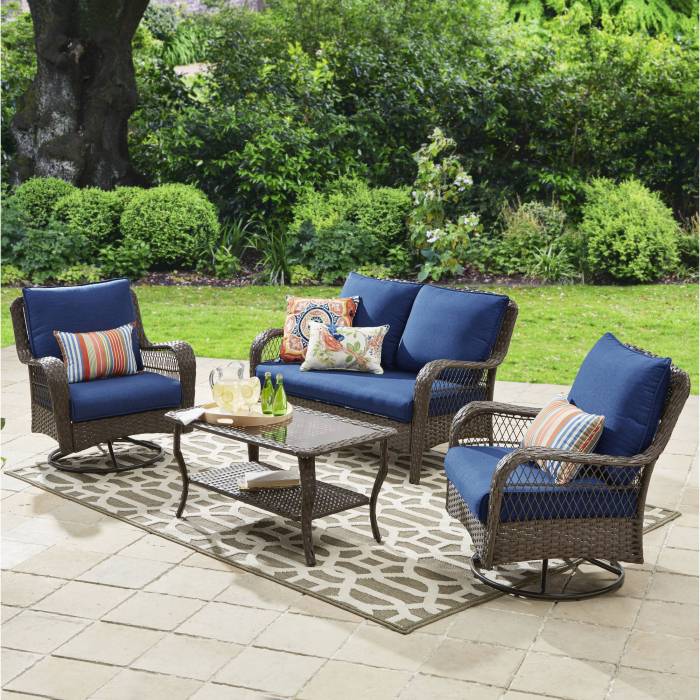
Transforming your patio into an inviting outdoor oasis begins with selecting the right furniture. This guide delves into the world of patio furniture, exploring diverse materials, styles, and essential features to consider. From the durability of teak wood to the low-maintenance appeal of resin wicker, we’ll navigate the options, helping you choose pieces that perfectly complement your space and lifestyle.
We’ll also cover practical aspects like maintenance and care, ensuring your investment lasts for years to come.
Understanding your patio’s size and style is crucial for creating a functional and aesthetically pleasing arrangement. We’ll offer design suggestions for various patio dimensions, guiding you through the process of selecting furniture that enhances the overall ambiance. Whether you envision a minimalist retreat or a vibrant tropical escape, this guide provides the knowledge and inspiration to create your dream outdoor space.
Essential Features to Consider
Choosing the right outdoor patio furniture involves careful consideration of several key features to ensure both comfort and longevity. Investing in high-quality pieces that meet your needs will significantly enhance your enjoyment of your outdoor space for years to come. This section will highlight the most crucial aspects to keep in mind during your selection process.
Comfort and Ergonomics
Proper seating height, ergonomic design, and cushion quality are paramount for comfortable outdoor furniture. Discomfort can quickly turn a relaxing patio experience into an uncomfortable one. A chair that is too low or too high can strain your back and legs, while poor ergonomic design can lead to pressure points and stiffness. High-quality cushions, made from durable, weather-resistant materials and filled with resilient foam, offer superior comfort and support, even during extended periods of use.
For example, a deep-seated chair with lumbar support will provide significantly more comfort than a shallow, rigid seat. Consider the weight and height of the intended users to choose appropriate seating heights and depths.
Weather Resistance
Outdoor furniture is constantly exposed to the elements, so weather resistance is critical. Materials should be chosen for their ability to withstand sun, rain, snow, and temperature fluctuations. UV protection is essential to prevent fading and deterioration of fabrics and finishes. Look for furniture constructed from materials like all-weather wicker, powder-coated aluminum, or durable teak wood, known for their resistance to moisture and UV damage.
Water-resistant cushions, ideally with quick-drying capabilities, are crucial for maintaining comfort and preventing mold and mildew growth. Rust-resistant finishes on metal frames are also a must, ensuring the longevity of your furniture. For instance, a powder-coated aluminum frame will resist rust far better than an uncoated steel frame.
Durability and Construction
Durability ensures your furniture will withstand regular use and the rigors of outdoor conditions. Solid construction, using high-quality materials and robust joinery techniques, is paramount. Check for sturdy frames, reinforced joints, and durable fabrics. Look for furniture with reinforced seams on cushions and well-secured components. The weight of the furniture can often indicate its build quality – heavier, sturdier pieces generally indicate better construction and longevity.
For example, a heavy teak wood chair will likely be more durable than a lightweight plastic chair.
Maintenance and Care of Outdoor Furniture
Protecting your investment in high-quality outdoor furniture requires consistent care and maintenance. Regular cleaning and seasonal preparation will significantly extend the lifespan of your patio set, ensuring years of enjoyment. Neglecting these practices can lead to premature wear and tear, necessitating costly repairs or even replacement. This section Artikels effective cleaning and maintenance strategies for various materials, as well as winterization techniques to safeguard your furniture from harsh weather conditions.
Cleaning and Maintenance Procedures for Various Materials
Different materials require specific cleaning methods. Using inappropriate cleaning solutions can damage the finish or fabric, reducing the furniture’s aesthetic appeal and durability. The following provides guidance on effective cleaning techniques for common outdoor furniture materials.
- Wood: Regularly sweep or brush away dirt and debris. For cleaning, use a mild soap solution (like a few drops of dish soap in warm water) and a soft cloth or sponge. Rinse thoroughly and allow to air dry completely. Avoid power washing, which can damage the wood. Apply a wood sealant annually to protect against moisture and UV damage.
For teak, consider a teak cleaner and sealer to maintain its natural beauty.
- Wrought Iron/Steel: Wipe down with a damp cloth to remove dirt and dust. For more stubborn stains, use a mixture of warm water and mild dish soap. Rinse thoroughly and dry immediately to prevent rust. Apply a rust-resistant paint or sealant periodically to maintain the finish and prevent corrosion. Consider using a protective cover during periods of heavy rain or snow.
- Aluminum: Aluminum is relatively low-maintenance. Clean with a mild soap and water solution, rinsing and drying thoroughly. Avoid abrasive cleaners, which can scratch the surface. A protective cover is recommended during harsh weather conditions.
- Plastic/Resin Wicker: These materials are generally easy to clean. Use a mild soap and water solution, scrubbing gently with a soft brush or sponge. Rinse thoroughly and allow to air dry. For stubborn stains, a solution of baking soda and water can be effective. Avoid harsh chemicals or abrasive cleaners.
- Fabric Cushions: Spot clean spills immediately. For deeper cleaning, use a mild detergent and water solution, following the manufacturer’s instructions. Allow cushions to air dry completely before storing or replacing on the furniture. Consider using waterproof cushion covers for added protection.
Winterizing Patio Furniture
Proper winterization is crucial for extending the life of your outdoor furniture. Failing to protect your furniture from the elements can result in significant damage, requiring costly repairs or replacement. The following steps will help you prepare your furniture for the winter months.
- Clean Thoroughly: Before storing, thoroughly clean your furniture using the appropriate methods for the material (as Artikeld above). Ensure all surfaces are completely dry.
- Repair Any Damage: Address any loose screws, cracks, or other damage before storing. This will prevent further deterioration during the winter months.
- Protect from Moisture: Store furniture in a dry, covered area, such as a garage, shed, or basement. If storage is not feasible, use high-quality waterproof covers specifically designed for outdoor furniture. Ensure the covers are properly secured to prevent water from seeping underneath.
- Properly Store Cushions: Store cushions indoors in a dry, well-ventilated area. Consider using airtight storage bags to prevent moisture and mildew. For fabric cushions, vacuuming or spot-cleaning before storage is recommended.
- Elevate Furniture: If storing furniture outdoors, elevate it slightly off the ground using wooden blocks or pallets to prevent moisture buildup.
Regular Inspections and Repairs
Regular inspections are essential for identifying and addressing minor issues before they escalate into major problems. Promptly addressing minor repairs can prevent costly replacements. For example, a loose screw can easily be tightened, preventing a piece of furniture from becoming unstable or damaged. Similarly, a small scratch on a wooden surface can be touched up with wood stain or filler to prevent further deterioration.
Addressing such issues proactively extends the furniture’s lifespan and maintains its aesthetic appeal.
Outdoor Furniture Buying Guide
Choosing the perfect outdoor furniture can significantly enhance your patio experience. This guide will help you navigate the process, ensuring you make informed decisions that align with your needs and budget. We’ll cover key considerations, smart shopping strategies, and retailer comparisons to help you find the ideal pieces for your outdoor space.
Budgeting for Outdoor Furniture
Establishing a clear budget is paramount. Consider not only the initial cost of the furniture but also potential maintenance expenses, such as cleaning supplies, replacement cushions, or repairs. A realistic budget prevents overspending and ensures you can select high-quality pieces within your financial means. For instance, allocating a specific amount for each furniture category (e.g., $500 for a dining set, $200 for lounge chairs) can streamline your purchasing process.
Assessing Patio Space and Layout
Before browsing furniture, meticulously measure your patio or outdoor area. Sketch a layout, noting existing features like plants, pathways, and structures. This allows you to visualize furniture placement and ensure adequate space for movement and comfortable seating arrangements. Consider the scale of your space – oversized furniture can overwhelm a small patio, while undersized pieces can look lost in a large one.
Accurate measurements prevent costly mistakes and ensure a harmonious outdoor design.
Choosing a Style that Complements Your Home
Your outdoor furniture should complement your home’s architectural style and overall aesthetic. Consider the color palette, materials, and design elements of your house. For example, a modern home might pair well with sleek, minimalist furniture, while a traditional home might benefit from more ornate, classic pieces. Matching styles creates a cohesive and visually appealing outdoor space. Browse design magazines or online resources for inspiration and to identify styles that resonate with your taste.
Understanding Maintenance Requirements
Different materials require varying levels of maintenance. Wicker, for instance, may require regular cleaning and occasional resealing, while aluminum is generally low-maintenance. Understanding these requirements beforehand helps you choose furniture that aligns with your lifestyle and willingness to dedicate time to upkeep. Factor in the climate – furniture exposed to harsh weather conditions will necessitate more frequent cleaning and potential repairs.
Choosing durable, weather-resistant materials minimizes long-term maintenance needs.
Retailer and Brand Comparison
Several retailers and brands offer outdoor furniture, each with its strengths and weaknesses. Big-box stores like Home Depot and Lowe’s often offer a wide selection at competitive prices but may lack the level of customization or higher-end materials found in specialty stores. Specialty retailers, on the other hand, typically offer more unique designs and higher-quality materials but at a premium price.
Brands such as Brown Jordan, Lloyd Flanders, and Telescope Casual Furniture are known for their durability and high-end designs, but they often come with a higher price tag. Consider your budget and desired level of quality when choosing a retailer and brand. Reading online reviews can also provide valuable insights into customer experiences and product durability.
Outdoor Furniture: A Broader Perspective
Outdoor furniture has undergone a significant transformation in recent decades, evolving from purely functional pieces to sophisticated design elements that enhance the aesthetic and usability of outdoor living spaces. This evolution reflects changing lifestyles, a growing appreciation for outdoor living, and advancements in materials and manufacturing techniques.
Evolution and Trends in Outdoor Furniture Design
The past few decades have witnessed a dramatic shift in outdoor furniture design. Early styles were often characterized by simple, utilitarian designs primarily focused on durability and weather resistance. Materials were limited, typically consisting of heavy wood, wrought iron, or plastic. However, contemporary designs prioritize comfort, style, and sustainability, incorporating a wider range of materials and incorporating innovative design features.
We’ve seen a move away from bulky, heavy pieces towards lighter, more versatile furniture that can be easily rearranged and adapted to different needs. The integration of ergonomic principles has also led to more comfortable seating and lounging options. Furthermore, the influence of indoor design trends is evident, with outdoor furniture increasingly reflecting contemporary interior styles, incorporating sleek lines, modern materials, and a broader palette of colors and textures.
Innovative and Sustainable Outdoor Furniture Designs
The increasing awareness of environmental concerns has spurred the development of innovative and sustainable outdoor furniture designs. Many manufacturers now utilize recycled materials, such as reclaimed wood, recycled aluminum, and plastic waste, to create durable and stylish pieces. For example, some companies use recycled plastic lumber, which is incredibly weather-resistant and requires minimal maintenance. This material is often molded to resemble traditional wood, offering a familiar aesthetic with the added benefit of environmental responsibility.
Another example is the use of bamboo, a rapidly renewable resource, in the construction of outdoor furniture. Bamboo is incredibly strong and aesthetically pleasing, offering a natural and sustainable alternative to traditional hardwoods. Furthermore, some designers are exploring the use of bio-based materials, such as mycelium (mushroom roots), to create unique and sustainable furniture pieces. Mycelium can be grown into specific shapes and then treated to create a durable, lightweight, and compostable material.
Impact of Outdoor Furniture on Outdoor Living Spaces
Outdoor furniture plays a crucial role in defining the overall aesthetic and functionality of outdoor living spaces. The style of the furniture can dramatically influence the overall atmosphere, ranging from a relaxed and casual feel to a more formal and sophisticated ambiance. The choice of materials, colors, and textures can significantly impact the visual appeal of the space.
Furthermore, the arrangement and placement of furniture directly impact the functionality of the area, determining how it is used and experienced. Well-designed outdoor furniture can create distinct zones within a larger space, such as a dining area, a lounging area, or a conversation area. It can also enhance the connection between the indoor and outdoor spaces, seamlessly extending the living area beyond the confines of the house.
For example, a carefully selected set of comfortable outdoor sofas and armchairs can transform a patio into a welcoming and inviting space for relaxation and socializing, enhancing the overall enjoyment and functionality of the outdoor area.
Creating the perfect patio involves careful consideration of many factors, from material selection to thoughtful arrangement. By understanding the nuances of different materials, styles, and features, you can confidently choose furniture that enhances both the aesthetic appeal and functionality of your outdoor space. Remember to prioritize comfort, durability, and weather resistance to ensure your patio furniture provides years of enjoyment.
With a little planning and the right choices, your patio will become a beloved extension of your home, a place for relaxation, entertaining, and creating lasting memories.
Q&A
What is the best material for outdoor furniture in a coastal climate?
Aluminum or powder-coated steel are excellent choices for coastal areas due to their resistance to rust and corrosion from salt air. Marine-grade teak is also a durable option but requires more maintenance.
How often should I clean my outdoor patio furniture?
Regular cleaning, ideally after each use or at least weekly, prevents dirt and debris buildup. More thorough cleaning, including washing with appropriate solutions, should be done seasonally.
How can I protect my cushions from fading?
Store cushions indoors when not in use or use protective covers designed for outdoor furniture cushions. Choose fade-resistant fabrics when possible.


